
Crypto Banking Bans, Interac Delays, and Payout Speed: What Canadian Players Should Look For in the Best Bitcoin Casino in 2026
I've stopped counting the emails. Same question from Canadian readers every week, just worded differently: 'Why did my deposit get reversed?' Or 'why is my withdrawal still pending three days later?' Nobody ever writes in about the flashiest welcome bonus. It's money movement, every time. That's where the friction lives.
And in 2026, the friction is real. Card processors keep tagging gambling merchant codes and quietly declining. Interac e-Transfer windows stretch past whatever that on-screen timer promised. Provincial-licensed sites — legitimate ones, I'm not accusing anybody of anything — still hold withdrawals for 24 to 72 hours while funds clear internal review. None of it is a scandal. It's plumbing.
So the question worth asking isn't 'which casino has the biggest bonus.' It's 'which platform moves my money in and out without drama?' That's what I want to cover here: how deposits really clear in Canada, why crypto-native operators settle faster, how to check a licence and a provably fair RNG, what the fees actually cost you, and how to spot a platform worth trusting before you send a dollar. If you'd rather jump straight to a shortlist, this best bitcoin casino comparison hub is a fair starting point. Read the criteria first, though. A list is only as good as the filter you run it through.
How Canadian Deposits Actually Work in 2026
Canada has no federal licensing regime for online casinos. That one fact explains most of the confusion players run into. Instead you're juggling three parallel realities: provincially run or provincially regulated sites (Ontario's iGaming framework is the most developed, and other provinces run their own monopolies), offshore crypto-native operators, and banks that treat gambling merchant category codes as high-risk by default.
The result is a patchwork. A deposit that clears instantly on one rail can bounce on another — and your bank's policy, not the casino's, usually decides which.
Interac, E-Transfer, and Card Rails Compared
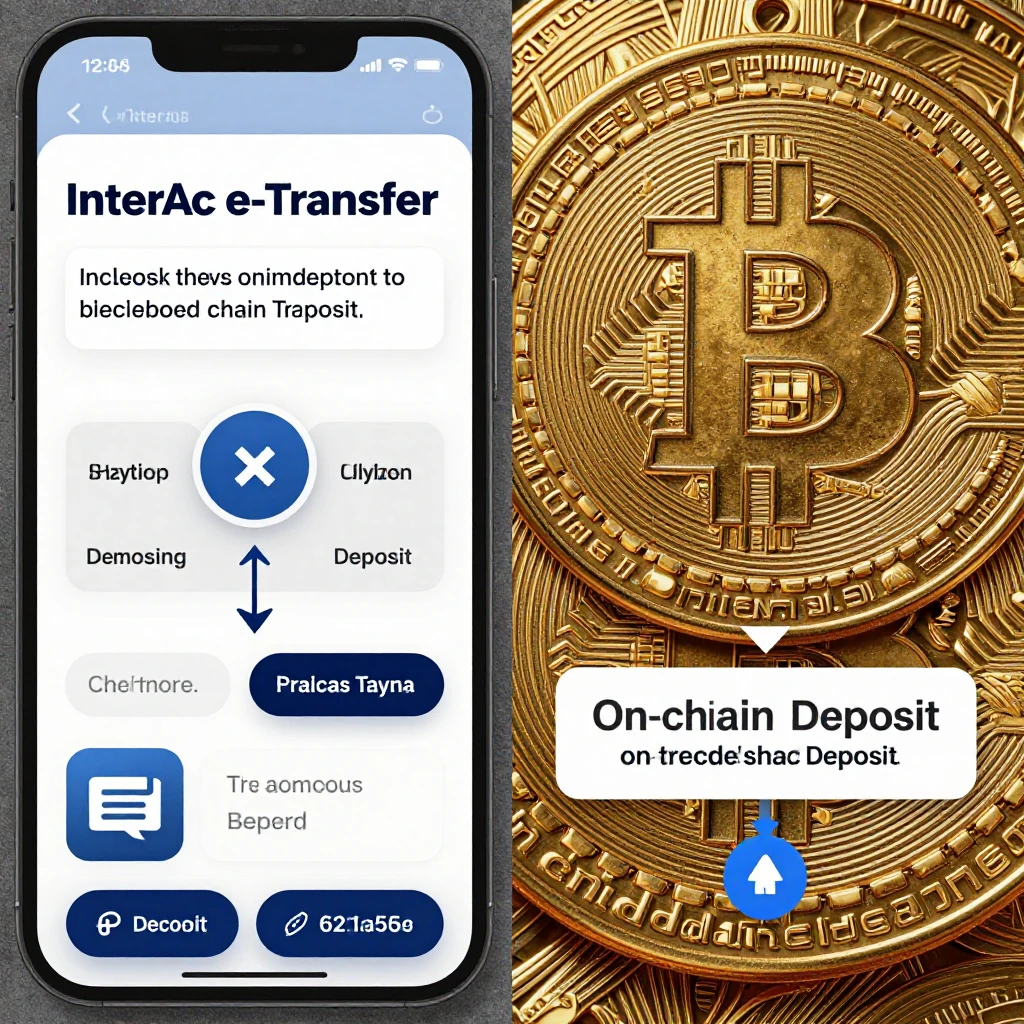
Interac Debit and Interac e-Transfer are the workhorses. Cheap, familiar, and when they clear you're looking at instant to a few minutes. The catch is bank-side filtering: several Canadian institutions block or throttle gambling transactions outright, and per-transaction limits swing wildly from one bank to the next. Credit cards are worse. Gambling MCCs get declined often, and some issuers code the transaction as a cash advance, which means interest from day one. Local vouchers exist as a fallback, but they usually carry a fee and a narrow redemption window.
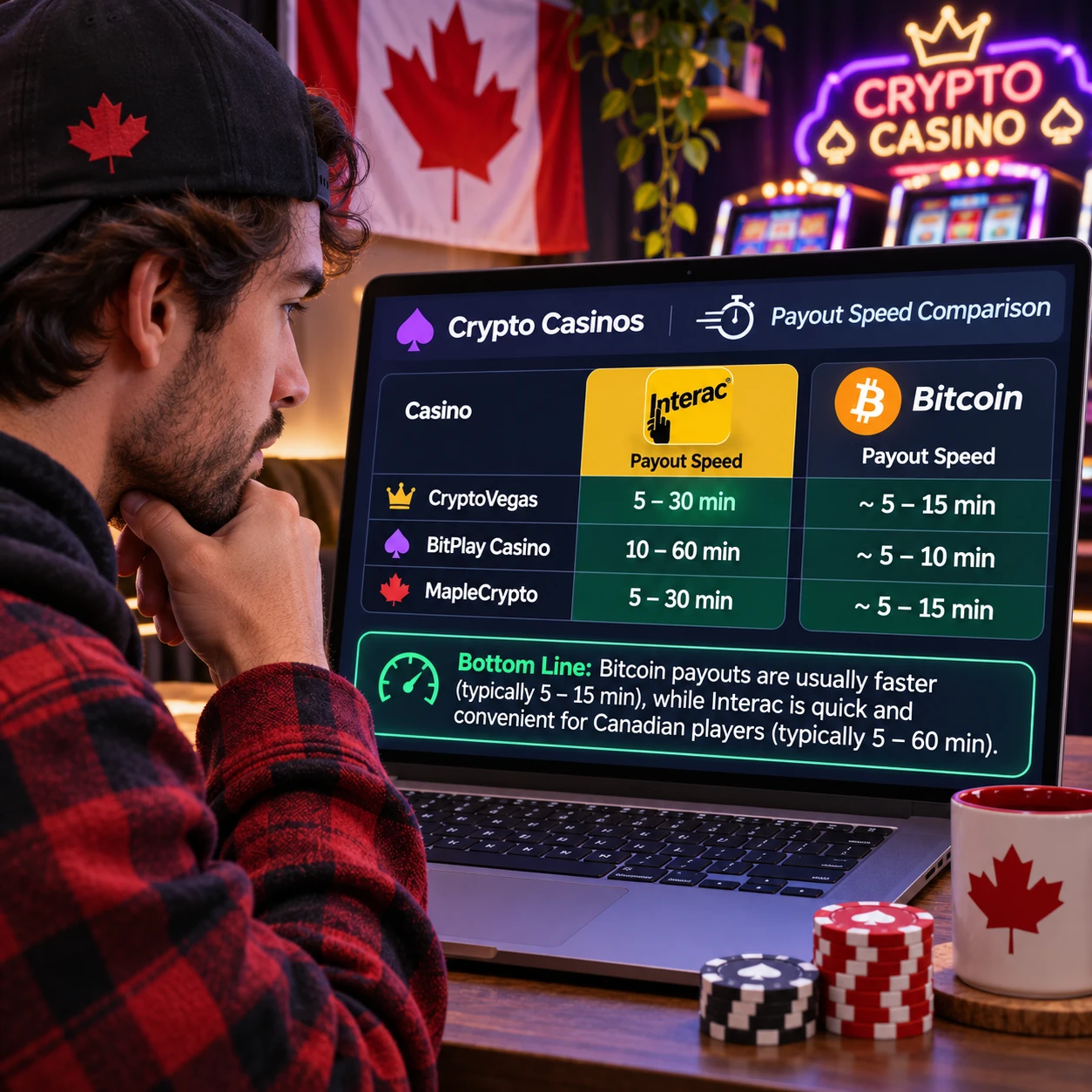
Withdrawals are the slower half. Same-day to 48 hours is realistic on e-Transfer, and weekends add dead time, because those rails aren't really 'instant' end to end.
What 'Crypto Deposit' Really Means On-Chain
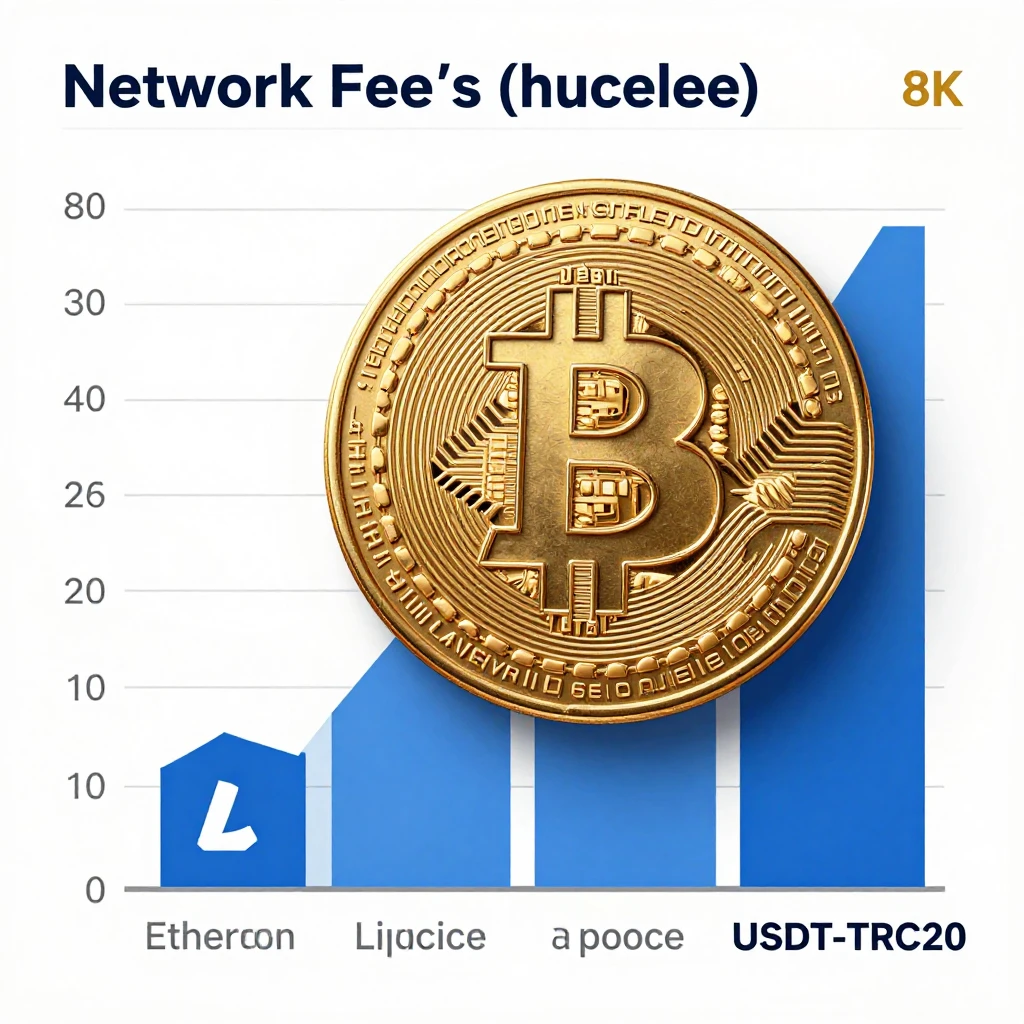
A crypto deposit is a two-step process: you get fiat into crypto through an exchange or a Canadian-compliant on-ramp, then you send it to the casino's wallet address, where it gets credited internally. Chain choice matters more than most people realise. BTC is secure but slow and expensive during congestion. ETH is better, though gas fees bite. LTC, TRX, and USDT on TRC-20 move fast and cost pennies. A $30 deposit on the wrong chain can lose a fifth of itself before it ever lands.
One thing that doesn't change: KYC still applies at any operator worth using, no matter how you funded the account.
Why Crypto Casinos Cash Out Faster Than Provincial-Licensed Sites
This is structural, not marketing. Provincial models batch withdrawals through legacy payment processors and often build in cooling-off checks tied to responsible-gambling policy. Defensible design — but it means your money sits in a queue. Crypto operators settle on-chain, so an automated approval queue replaces a manual review desk, and the bottleneck shifts from internal process to blockchain confirmation time.
The honest caveats matter, though. First withdrawals almost always trigger manual KYC review. Large withdrawals can hit tier limits. And 'instant' almost always means 'instant once your account is verified.' A decent way to cut through the noise is to line up published payout windows side by side. The best bitcoin casino benchmark list does exactly that, and treating it as a comparison table rather than a recommendation is the right posture.
The Real Time-to-Cash Timeline
Here's how it actually breaks down for a Canadian player:
- Request submitted → internal approval: minutes to 24 hours
- Blockchain broadcast: near-instant once approved
- Confirmations: minutes to an hour, chain-dependent
- Fiat off-ramp at an exchange: instant to 2 business days
Notice where the delay lands. For most people the exchange, not the casino, is the slowest link in the chain. That changes the maths: if you're cashing out to CAD regularly, keep a verified on-ramp account ready and stop converting back and forth for no reason.
Verifying Licensing and Provably Fair Games Before You Play
A Curacao GCB or Anjouan licence is an offshore registration. It is not Canadian consumer protection, and it doesn't give you recourse through a provincial regulator. What it does give you is an identifiable operator entity and a jurisdiction that can, in principle, act. Where do you find it? The site footer. Look for the licence number and the legal entity named next to it, then cross-check that entity against the licence registry.
Provably fair is a separate thing. It means the game commits to a server seed hash before you play, combines it with your client seed and a nonce, and lets you verify the round afterwards by rotating the seed and checking the hash. If a site says 'provably fair' but gives you no way to inspect a completed round, that's a checkbox, not a feature. Worth noting too: provably fair applies to RNG-based games, and it says nothing at all about live-dealer tables, which run on real hardware.
A Five-Minute Trust Audit
- Look up the licence number on the regulator's registry
- Cross-check the named operator entity against the footer
- Scan the terms page for withdrawal caps and bonus wagering multipliers
- Open live chat and time the response — and check whether it's a human
- Compare advertised payout windows against community reports
- Look for independent game-auditor certifications or RNG attestations
Fees, Network Costs, and the Hidden Drag on Your Bankroll
Fees stack quietly. There's the blockchain network fee, which spikes with congestion. There's the casino's own deposit and withdrawal fee — most advertise zero, but check minimums and per-transaction caps. There's the currency conversion spread when CAD becomes crypto. There's the effective cost of bonus wagering, often the biggest number in the whole equation. And there are dormancy fees on inactive accounts.
Worked example: deposit $50 via BTC during a busy period. A $6 network fee plus a 2–3% conversion spread leaves you playing with roughly $41–42. That's a 16% haircut before you've spun anything. Move the same $50 on TRC-20 USDT and you might land at $48.50. Same intent, very different outcome. The fixes are simple: pick low-fee chains, batch withdrawals above the minimum, and stop converting back and forth.
Responsible Gambling Tools and the Canadian Support Landscape
A trustworthy platform gives you deposit limits, loss limits, session timers, reality checks, self-exclusion, and time-out periods. The test is whether these are real settings or marketing checkboxes. Try setting a low deposit limit and watch whether it applies immediately and can't be instantly reversed.
Here's the gap that matters. Provincially regulated sites must connect to provincial self-exclusion programs. Offshore crypto operators generally don't. That shifts the burden onto you. And crypto deposits are irreversible, which removes the chargeback safety net some players unconsciously lean on. If gambling stops being fun, ConnexOntario, your provincial helpline, and national problem-gambling support services are there. Use them.
Pre-Deposit Checklist for Spotting a Trustworthy Platform
- Verifiable licence with a named operator entity
- Published payout windows that stay stable over time
- Provably fair games with independent round verification
- Transparent fee schedule, no surprise withdrawal charges
- CAD-friendly deposit paths, including Interac where possible
- Responsible-gambling controls that actually function
- Support that reaches a real human quickly
- Bonus terms written in plain language
- Clean record on community payout complaints
Apply that filter to any operator — including whatever you find through a comparison hub. It takes five minutes and it saves weeks of frustration.
Final Thoughts
Three decisions determine whether a Canadian crypto casino experience is good in 2026: how the money goes in, how fast it comes out, and whether the operator can actually be verified. Payout speed is an engineering and policy outcome, not a marketing claim. Any site that can't show you its licence number and its payout terms deserves your scepticism.
The safest approach is still the simplest. Deposit small, withdraw small, and see how the platform behaves before you commit real funds. Run the checklist before you sign up anywhere, and treat gambling as entertainment with a fixed budget. If it stops feeling that way, stop.
